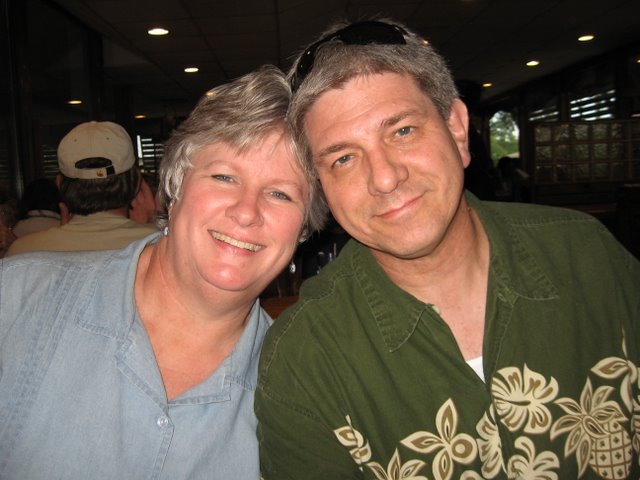
A new study (which you can read about here) shows that it is not blondes who are actually dumb but people who look at blondes or pictures of blondes. In the study men were shown pictures of blondes and then given a general-knowledge test. They scored below par on the test. The article doesn't describe what "below par" means but I guess we are supposed to intuitively get the meaning. I've noticed in the past that men tend to act "stupider" in the presence of a blonde (usually trying to impress her) but had never expected that we men would also be affected by a mere picture. Women also scored lower on the test when shown the same pictures. The purpose of the study was to show how we react to stereotypes and cultural beliefs. To some degree the study suggests we become what we believe about what we are viewing. You need to read that sentence carefully.
I wonder if this is part of the reason why God prohibited images being made of Him? If we tend to act according to our beliefs when viewing pictures of blondes, then viewing an image of a god should also affect us as well. Although this study is probably not considered all that scientific by some in the know, I wonder if there isn't at least some truth to the conclusions drawn by the researchers.
If we do not use images of God then He remains invisible, mysterious, powerful, spiritual, transcendent, and sovereign. With an image He becomes manageable. Interesting how a study about how people view blondes can make you think about our relationship to God.
Sunday, November 25, 2007

Wednesday, November 14, 2007
Bob's Reading Level

Get a Cash Advance
So what does this mean? I guess it means I'm smarter than a fifth grader.Tuesday, November 13, 2007
Jesus' Mighty Men
I was writing an article for the bulletin on Veteran's Day. I used 2Samuel 23:8-38 for honoring our military. I don't know whether or not it's an exact parallel but I thought it close enough. As I was writing the article and reading the text, it struck me that the text mentions two groups of David's men, the thirty and the Three. Several men have a name almost of the Three but they are not of the Three. This got me to thinking about Jesus' three - Peter, James, and John. I wonder if the Gospels are hinting that Jesus has his three just as David did? I don't think I've ever read anything that draws a parallel between David and Jesus in this regard. Has anyone ever read anything that suggests this? Has anyone ever thought of this parallel?
These three get more mention in the Gospels than any of the other apostles. They also are the one's that Jesus generally takes with him on special occasions (like the Transfiguration). Peter gets to preach the first gospel proclamation. James is the first to die in persecution. John gets to hang around and probably is the last to die. They do seem to occupy a special place in the body of Christ. So are they Jesus' Three?
These three get more mention in the Gospels than any of the other apostles. They also are the one's that Jesus generally takes with him on special occasions (like the Transfiguration). Peter gets to preach the first gospel proclamation. James is the first to die in persecution. John gets to hang around and probably is the last to die. They do seem to occupy a special place in the body of Christ. So are they Jesus' Three?
Sunday, October 21, 2007
Meet the Beatles


Last Saturday Pat, Loni, and I got to see the Beatles in concert. Not really, it was a tribute band called Revolution. You can read about their story here. The concert was sponsored by the Mount Dora Music Festival. You can read about the festival here. Mount Dora is renovating an old theater into a "concert boutique." They hope to extend the theater's seating and turn it into a really nice place for concerts.
This concert was unique in that probably 85% of the people were over 50. There were a few young adults and even some teens but mostly baby boomers trying to remember the glory years of the 60s. The band really did a good job of playing the Beatles' songs just the way the Beatles did. The first half of the concert was the early Beatles. Then they came out dressed in Sgt. Pepper outfits and did later stuff by the Beatles. What a great time we had listening to the Beatles.
Thursday, October 11, 2007
Book Review - Biblical Preaching

With my last post I mentioned that I was planning on reading Robinson's book and trying to follow his methodology. My purpose was to regain some discipline in my preparation. I've read numerous books on homiletics over the years and think that I've tried to allow all of them to influence me so that I might find my own voice (style). I think in some ways that I've reached that goal but I don't think that I've figured out how to speak to my audience in my voice (style). So I'm going to follow Robinson's methodology and see what happens. Robinson has influenced quite a few people in the field of homiletics. I'm talking not only students and preachers but writers of homiletics as well. I will probably be reviewing some of those books in the future as well.
I read Robinson's first edition sometime back in the late 80s. I didn't really absorb the book and its details immediately. Things sometimes have to simmer on my back burner before I really understand how to use them. I think Robinson and other homileticians have simmered long enough. I picked up Robinson's book at a local Bible bookstore outlet center for about half price. There are 10 chapters in the book, as well as an appendix with a sample sermon. The chapters take the reader from text selection to finished product in 10 stages. The stages do not correspond to the chapters. Robinson opens with two chapters on an explanation about expository preaching and "the big idea." Robinson is saying that most preaching should be based on a coherent passage and a single idea. This single idea (a.ka. the big idea) is the heart of his methodology. Once he establishes these two points the book then explains how to reach the finished sermon.
There are several strengths to Robinson's book. One is that it provides a disciplined approach to sermon preparation. I believe that if one follows this approach, the finished sermon will be of good quality. Another strength is the "big idea" that has become Robinson's trademark. The "big idea" approach gives the sermon a focus and keeps the preacher from wandering and the congregation from wondering what in the world he is talking about.
The book also has its weaknesses. One is that his stage on studying the passage is not very clear. Tom Long (The Witness of Preaching) and Fred Craddock (Preaching) both have excellent sections on the study process. Robinson should have incorporated a better section on studying the passage with this second edition. Another weakness is application. Even though I believe that I do a fairly good job of trying to address how to apply my sermons, I still feel the need to find something that will help me make sure that I'm providing good application suggestions. Robinson talks about application but like most books on preaching really ends up short. There is a chapter in The Big Idea of Biblical Preaching that will help.
Robinson's book has echoes of Charles Koller (How to Preach without Notes), Lloyd Perry (Biblical Preaching for Today's World), and a host of others. His methodology has some similarities to Tom Long's. It is well worth your time as a preacher to invest in the book and to follow his methodology if only to see how it fits into your already established sermon preparation.
I'm trying to incorporate some of Long's and Craddock's study procedures into Robinson's overall approach. Maybe some day down the road I'll let you know how I've benefited from this approach.
Thursday, October 04, 2007
Book Review - The Big Idea of Biblical Preaching

Several authors have collaborated to write a book that tries to further the idea that Haddon Robinson put in his classic homiletic text - Biblical Preaching. The contributors are trying to demonstrate that Robinson's style of preparing expository sermons is still relevant to our diverse culture.
The book is divided into three parts. Part One has two chapters and is geared toward showing why "the big idea" of the text and sermon packs a good homiletical punch. Part Two, with five chapters, focuses on the biblical and theological power of "the big idea." This section takes us through literary types and culture types. Part Three has four chapters and is dedicated to getting "the big idea" across in our sermons.
The weakest chapter was Chapter 6 (The Big Idea and Biblical Theology's Grand Theme) by Bruce L. Shelley. The chapter was weak because "the big idea" of the chapter wasn't really about biblical theology and the grand theme of the Bible. It was more about getting across the emotion (I would have preferred "mood") of the text. I agree with what the author said in his chapter, so it wasn't weak in the sense that what he said didn't relate to the theme of the book. It was weak because his chapter content and chapter title didn't match up. The chapter should have been called "The Big Idea and the Mood of the Text." Then another chapter should have focused on Biblical Theology and the Grand Theme of the Bible.
The highlight of the book was two chapters. Donald Sunukjian (doesn't anyone know how to pronounce his name?) in chapter 8 wrote about allowing the flow of the text to influence the flow of your sermon. It was such an excellent chapter that I have his book at the top of my "books to buy NOW" list.
The other great chapter was by Joseph Stowell III on "Preaching for a Change" (chapter 9). He made some excellent suggestions on how to build application into your lessons. I think trying to have effective applications in my lessons is my weakest part. Stowell's were the best I've read.
This is a highly recommend book for preachers. Your style will be enhanced by reading and incorporating the suggestions found here. I would also recommend that you find the books of the contributors and read them as well. I have several of their books on my list. I liked this book so much that I've decided to reread Robinson's book and try to follow his methodology for a while. I have read so many books on homiletics (and tried to incorporate way too many ideas) that I have felt I don't really have a style of my own. Or maybe it's just that I feel I lack good discipline. I like what I've read about Robinson's method so I'm going to try it for a while and see what happens.
I Vant Yur Blood!
| You Could Be a Vampire... If You Had To |
 Like most people, the thought of being a vampire has crossed your mind. But you're not sure if you'd do it, even if you could. Living forever doesn't sound half bad, if you could live forever with the people you love the most. But do vampires even love? And would the vampire version of you even be you? It's all too much to contemplate. Luckily, the chances of you ever becoming a vampire are astronomically low. What you would like best about being a vampire: Living forever What you would like least about being a vampire: Blood stained teeth |

I got an A!
| You Scored an A |
 You got 10/10 questions correct. It's pretty obvious that you don't make basic grammatical errors. If anything, you're annoyed when people make simple mistakes on their blogs. As far as people with bad grammar go, you know they're only human. And it's humanity and its current condition that truly disturb you sometimes. |
You are what you eat!
| What Your Pizza Reveals |
 Your appetite is pretty average. You don't go overboard - but you don't deprive yourself either. You consider pizza to be bread... very good bread. You fit in best in the Midwest part of the US. You like food that's traditional and well crafted. You aren't impressed with "gourmet" foods. You are generous, outgoing, and considerate with your choices. You are cultured and intellectual. You should consider traveling to Vienna. The stereotype that best fits you is emo. You think you're special... and you kind of are. |
What Does Your Pizza Say About You?
So here is what my pizza-eating habits say about me. I wonder what other foods reveal our personalities? So have you taken the test?
Tuesday, September 18, 2007
Book Review - Preaching that Speaks to Women
Preaching that Speaks to Women was written by Alice P. Mathews. The book got my attention because the introduction is written by Haddon Robinson. The book is not about women's role in the church. It is a rather good attempt to help preachers understand a group that represents more than half of any congregation.
Ms. Mathews first chapter deals with the myths of the differences between men and women. She acknowledges that there are biological differences and discusses how she sees our culture mitigating those differences in women. She ends up somewhere in the middle of the discussion of "nature vs. nurture." She tries quite hard to end up in the discussion where she admits the differences but doesn't want anyone to think she believes in a stereo-typical male or female mindset. I think that some other authors will do a better job of showing the biological differences between the two genders but Ms. Mathews does a good job of showing that the differences exist and how those differences need to be considered by the preacher.
She organizes her book around the biblical statement that we are to love God with all our heart, soul, mind, and strength. Each of the statements refer to areas of importance to women.
chp.2 - love with our hearts: deals with ethical decisions.
chp.3 - love with our souls: deals with the psychology of women
chp.4-6 - love with our minds: deals with epistemology (I thought this was the best of the book. Her discussion on postmodernism is quite good. this is also the hardest section of the book because of the deep subject matter)
chp.7-8 - love with our strength: deals with women's abilities and gifts
chp.9 - how women feel marginalized
chp.10 - practical advice
Each chapter is organized by the following pattern:
1. Discusses the topic
2. How this topic applies to preaching
3. Summing up the chapter
4. Questions to Ponder
I really liked this book and heartedly recommend it to every preacher. The author did not have a theological agenda about male/female roles in the church. I think that any preacher from conservative to liberal will find a lot to chew on and digest. One thing to note, this is not an easy read. She doesn't use big words but she delves into concepts (postmodernism, epistemology, etc.) that require a good deal of thinking. Some may see her practical suggestions in chapter 10 as concession to feminism but I think if we dig a little deeper we will see that we speak to a different breed of people today and we need to alter our terminology without altering our doctrine. I think her suggestions will play well in any congregation.
One goal that I've made concerning my sermons is paying closer attention to my illustrations. In one of her chapters she recounts a speaking engagement where she opened using an illustration concerning her sewing machine. She jokingly said at the end that this illustration was payback for all the football illustrations used by male preachers. She got quite a laugh and response to that joke. I got the point real quick. I'm trying to limit but not avoid stories or jokes from the male realm of things. I hope that this focus will engage the ladies in my congregation more.
Ms. Mathews first chapter deals with the myths of the differences between men and women. She acknowledges that there are biological differences and discusses how she sees our culture mitigating those differences in women. She ends up somewhere in the middle of the discussion of "nature vs. nurture." She tries quite hard to end up in the discussion where she admits the differences but doesn't want anyone to think she believes in a stereo-typical male or female mindset. I think that some other authors will do a better job of showing the biological differences between the two genders but Ms. Mathews does a good job of showing that the differences exist and how those differences need to be considered by the preacher.
She organizes her book around the biblical statement that we are to love God with all our heart, soul, mind, and strength. Each of the statements refer to areas of importance to women.
chp.2 - love with our hearts: deals with ethical decisions.
chp.3 - love with our souls: deals with the psychology of women
chp.4-6 - love with our minds: deals with epistemology (I thought this was the best of the book. Her discussion on postmodernism is quite good. this is also the hardest section of the book because of the deep subject matter)
chp.7-8 - love with our strength: deals with women's abilities and gifts
chp.9 - how women feel marginalized
chp.10 - practical advice
Each chapter is organized by the following pattern:
1. Discusses the topic
2. How this topic applies to preaching
3. Summing up the chapter
4. Questions to Ponder
I really liked this book and heartedly recommend it to every preacher. The author did not have a theological agenda about male/female roles in the church. I think that any preacher from conservative to liberal will find a lot to chew on and digest. One thing to note, this is not an easy read. She doesn't use big words but she delves into concepts (postmodernism, epistemology, etc.) that require a good deal of thinking. Some may see her practical suggestions in chapter 10 as concession to feminism but I think if we dig a little deeper we will see that we speak to a different breed of people today and we need to alter our terminology without altering our doctrine. I think her suggestions will play well in any congregation.
One goal that I've made concerning my sermons is paying closer attention to my illustrations. In one of her chapters she recounts a speaking engagement where she opened using an illustration concerning her sewing machine. She jokingly said at the end that this illustration was payback for all the football illustrations used by male preachers. She got quite a laugh and response to that joke. I got the point real quick. I'm trying to limit but not avoid stories or jokes from the male realm of things. I hope that this focus will engage the ladies in my congregation more.
Thursday, September 13, 2007
Strange Funeral

Since Trey told Lisa that he's done funerals for just about every kind of pet I thought maybe he could appreciate this story. Pat received it from a kindergarten teacher we know back in New Jersey.
As a young minister, I was asked by a funeral director to hold a
grave-side service for a homeless man, with no family or friends.
The funeral was to be held at a cemetery way back in the country,
and this man would be the first to be laid to rest there.
As I was not familiar with the backwoods area, I became lost; and
being a typical man did not
stop for directions. I finally arrived an hour late. I saw the
backhoe and the crew, who was eating lunch, but the hearse was
nowhere in sight. I apologized to the workers for my
tardiness, and stepped to the side of the open grave, where I saw
the vault lid already in place. I assured the workers I would not
hold them up for long, but this was t he proper thing to
do. The workers gathered around, still eating their lunch. I poured
out my heart and soul. As I preached the workers began to say
"Amen," "Praise the Lord," and "Glory"! I preached,
and I preached, like I'd never preached before: from Genesis all
the way to Revelations. I closed the lengthy service with a prayer
and walked to my car. As I was opening the door
and taking off my coat, I overheard one of the workers saying to
another, "I ain't never seen anything like that before and I've
been putting in septic tanks for twenty years."
I thought this story was hilarious. I've got a couple of stories like this only not involving a funeral. Perhaps I'll share one of those soon. Enjoy.
Fees for Speaking
Have you ever wondered what some celebrities charge for speaking? Well here is a partial list. Interesting that no politicians are mentioned. Some I recognize and some I don't but these are for you to ponder.
Alan Thicke - $10,001-$20,000
D.L. Hughley - $10,001-$20,000.
Jerry Stiller - $10,001-$20,000
Star Jones - $20,001-$30,000
Carson Kressley - $20,001-$30,000.
Carson Daly - $30,001-$50,000
Diane Sawyer - $30,001-$50,000.
Suzanne Somers - $30,001-$50,000.
Anderson Cooper - $50,001-$100,000.
Jimmy Kimmel - $50,000-$100,000
Kelly Ripa - $50,001-$100,000.
Bill Cosby - $100,000 and up.
Martha Stewart - $100,000 and up.
Jon Stewart - $100,000 and up.
Donald Trump - $200,000 and up.
You can read a little more about each celebrity and their fee here.
Alan Thicke - $10,001-$20,000
D.L. Hughley - $10,001-$20,000.
Jerry Stiller - $10,001-$20,000
Star Jones - $20,001-$30,000
Carson Kressley - $20,001-$30,000.
Carson Daly - $30,001-$50,000
Diane Sawyer - $30,001-$50,000.
Suzanne Somers - $30,001-$50,000.
Anderson Cooper - $50,001-$100,000.
Jimmy Kimmel - $50,000-$100,000
Kelly Ripa - $50,001-$100,000.
Bill Cosby - $100,000 and up.
Martha Stewart - $100,000 and up.
Jon Stewart - $100,000 and up.
Donald Trump - $200,000 and up.
You can read a little more about each celebrity and their fee here.
Thursday, September 06, 2007
Biblical Preaching
Here's an excellent article by William Willimon (definitely one of my favorite authors) that you should read. I personally think he's hit the nail on the head even though the article is 12 years old. I hope Don in particular reads it, considering his latest post which you can read here. I think you will find it enlightening. This article is found at Expository Thoughts. It is one of the blogs where I frequently find interesting ideas for sermons and sermon series.
Planning your sermons
During my first year of pulpit work (second year of full time ministry) we went on a foliage trip (October) with Pat's parents. Lisa was just 3 months old. We stopped every couple of hours so Pat could feed her. During one stop Lon and I got to talking (we were always talking Bible or some related topic) and the subject of planning one's sermons came up. Lon told me that the seminaries teach their students to spend a week during the summer planning their sermons for next year. I needed a plan badly because Monday morning was torture trying to figure out what to preach on Sunday. My plan was to preach sermon series. I started with biblical topics (worship, faith, salvation, evangelism, etc.) and wrote down titles of sermons that would help develop the big topic. I did the same thing with whole books of the Bible. I might choose a theme from a book and then develop that theme. Or I might just preach through the book verse by verse or paragraph by paragraph or section by section (depending on how big the book was). I might choose a section of a book that was just made for a sermon series (Sermon on the Mount, etc.). I found endless possibilities. That month I started my plan for the next year. I didn't have a clue as to the needs of my congregation. The congregation seemed to diverse to me to come up with a single set of needs. So I decided to preach a balanced set of sermons. Kind of like preparing a balanced meal for a family. I planned sermons from the OT, from the NT, from the Gospels, some expository, some topical, a book series, and I worked my plan. So beginning in 1980 to this present year, I have planned out my sermon titles and texts each year for the next year. Over the years, anytime the elders have suggested that the congregation needs a particular sermon, I have always interrupted whatever series I was on and fulfilled their request.
So what do you other preachers do in regards to planning your sermons? Do you do it by the year, by the quarter, by the month, or week to week? What plan do you use? Part of the reason I'm asking is because of a post Don just did (here). His discussion of how to preach to the entire congregation got me to thinking about how I plan my sermons. I recently found a book on planning your preaching that I haven't had a chance to read and digest. Maybe I will read it and do a review on it sometime soon. This is one area where I would really love to get some good ideas and input.
For those of you who don't preach, can you discern a plan or pattern in your preacher's sermons? Or have they shared with you what their plan is? Or maybe you've given this topic some thought and have some ideas of your own. Please share.
So what do you other preachers do in regards to planning your sermons? Do you do it by the year, by the quarter, by the month, or week to week? What plan do you use? Part of the reason I'm asking is because of a post Don just did (here). His discussion of how to preach to the entire congregation got me to thinking about how I plan my sermons. I recently found a book on planning your preaching that I haven't had a chance to read and digest. Maybe I will read it and do a review on it sometime soon. This is one area where I would really love to get some good ideas and input.
For those of you who don't preach, can you discern a plan or pattern in your preacher's sermons? Or have they shared with you what their plan is? Or maybe you've given this topic some thought and have some ideas of your own. Please share.
Thursday, August 30, 2007

Monday, August 13, 2007
St. Augustine, FL

Pat and I got to spend 3 days and 2 nights (well sort of) in St. Augustine courtesy of Bass Pro Shops. Bass Pro was promoting their partnership in a time share resort for $49 for this stay. We had wanted to visit St. Augustine and this seemed like the perfect opportunity. Of course we had to listen to an hour and a half sales pitch (which turned into 3 hours). We said no. But they kept a coming. There wasn't nigh as many as there was a while ago. But they kept a coming. A deal designed for our low income situation. We said no. Another aspect to sweeten the deal. We said no. But wait there's more. A sampler package. We still said no. And you can apply this amount to the down payment later on. What part of no don't you understand? Finally we received a cell phone number and 2 $25 gift cards to Bass Pro Shops. Now that's what I'm talking about. Can't wait to go to Orlando and use those cards.
 This is the Castillo de San Marcos, built by the Spanish between 1672 and 1695. It was built after Sir Francis Drake (a corsair at the time, a sort of state-approved pirate) attacked the city of St. Augustine. Since its completion it has never been taken during battle. Period (There's an illustration in there for someone's sermon.). The city has fallen several times but never the fort. We didn't have time to tour the fort (plus it was hot) but we will another time.
This is the lighthouse. We did climb all 219 steps to the top. What a view! Except that it was hot and a little hazy that day. We had a great time in America's oldest city. It was founded in Sept. 8. 1565 by Don Pedro Menendez de Aviles. He came ashore with 1,500 soldiers and colonists. If you want to read more about St. Augustine and its history you can click here. As you can tell we had a great time. Our accommodations were quite good. The only complaint - the heat. But the one really good thing - we were together.
Saturday, August 04, 2007
Our Media Culture
Here are some links to some interesting posts at FaithVisuals. The first is a two part interview with Shane Hipps. Hipps wrote The Hidden Power of Electronic Culture. I would recommend reading it. He has some interesting insights because of his work in the advertising business. The folks at FaithVisuals had a two part interview with him that you can read beginning here. Then you can read the second part here. He doesn't reject the visual media outright but does explore cautionary thinking toward the use of video projectors during our sermons.
FaithVisuals also has an interesting post about using icons in your PowerPoint slides rather than photos. I think the author makes an interesting point. Read his insights here and see what you think. He claims that sometimes photos can be distracting since the photo represents something specific rather than an idea. For instance, if you are talking about the home and use a photo of a home, some might sit in the audience and think, "I like that home!" They are distracted from your point. But an icon of a house helps them to picture their own home rather than someone else's. I think to a degree that this discussion fits in with Hipps's discussion about the medium having a message all its own.
Another thought pertaining to distractions during a PowerPoint sermon, Dr. Arlene Taylor recommends using only a white background. She maintains that colors bring up memories and thus a distraction. Dr. Taylor has a bi-monthly enewsletter about research on the brain. You can read her discussion on the use of white backgrounds here. Scroll down to the Q&A section. I suppose anything can be a distraction to anyone. You can never be sure of whether a fragrance, color, article of clothing, a word, or almost anything could be a distraction.
So what do some of you preachers do with your PowerPoint slides? How do you craft a presentation? For those of you who don't preach, what do your preachers do with PowerPoint? What do you think is an effective use of PowerPoint? I've been thinking about this for some time now. I've read a couple of books but I'm still trying to grow and learn. Share your thoughts with me.
FaithVisuals also has an interesting post about using icons in your PowerPoint slides rather than photos. I think the author makes an interesting point. Read his insights here and see what you think. He claims that sometimes photos can be distracting since the photo represents something specific rather than an idea. For instance, if you are talking about the home and use a photo of a home, some might sit in the audience and think, "I like that home!" They are distracted from your point. But an icon of a house helps them to picture their own home rather than someone else's. I think to a degree that this discussion fits in with Hipps's discussion about the medium having a message all its own.
Another thought pertaining to distractions during a PowerPoint sermon, Dr. Arlene Taylor recommends using only a white background. She maintains that colors bring up memories and thus a distraction. Dr. Taylor has a bi-monthly enewsletter about research on the brain. You can read her discussion on the use of white backgrounds here. Scroll down to the Q&A section. I suppose anything can be a distraction to anyone. You can never be sure of whether a fragrance, color, article of clothing, a word, or almost anything could be a distraction.
So what do some of you preachers do with your PowerPoint slides? How do you craft a presentation? For those of you who don't preach, what do your preachers do with PowerPoint? What do you think is an effective use of PowerPoint? I've been thinking about this for some time now. I've read a couple of books but I'm still trying to grow and learn. Share your thoughts with me.
Saturday, July 21, 2007
Messy Spirituality - Book Review
Michael Yaconelli’s book, Messy Spirituality, is all about living the Christian life in the real world. Overall it’s a good book. It has a good list of strengths. The most obvious strength is that Yaconelli reminds us we are imperfect. Living the Christian life doesn’t mean being perfect. We mess up occasionally and more often than we are often willing to admit. In the midst of our messiness God continues to save us and grant us grace.
Another strength is that Yaconelli doesn’t offer any quick fixes. You will not find a chapter entitled “30 days to a new you.” In fact Yaconelli even has a quote from Eugene Peterson, who entitled one of his books A Long Obedience In The Same Direction. Peterson’s book title speaks for itself and probably represents Yaconelli’s view on the development of spirituality. Peterson is of the mind that spirituality happens over a lifetime. Yaconelli believes the same.
Yaconelli also reminds us that we grow at different rates, in different ways, and in different areas. He mentions a woman who was present in his assembly and she forgot to prepare communion, which they were supposed to have that day. It dawned on her during the assembly that she forgot and she said one colorful word out loud that let everyone knew she suddenly remembered. We all have stories like that but I’m sure there are some who wish we didn’t.
At the start of each chapter Yaconelli has some great quotes from other writers. The quotes are almost as valuable as his prose. One of these days I’m going to take some of his quotes and use them for an article on my blog.
The book does have a couple of weaknesses. It is mostly anecdotal which is both a strength and a weakness. It is a string of stories about real people who mess up (I found myself in a lot of those stories). This fits in well with his purpose - to demonstrate we aren’t perfect. But so many of them left me with the feeling I had reading some salesperson’s book trying to prove how good one can do at selling. There are literally hundreds of stories showing how much you can make selling anything. After awhile you are tempted to say, “Enough already!” A few well chosen stories would have made his point (IMHO) just as well.
I felt he could have used a little more scriptural exposition. There are some great passages that would have fit in well Yaconelli’s premise. Like 1John 1:5-10. John basically tells us that we are going to mess up even though we are in the presence of the God who is light and has no darkness. We are in the presence of perfection. Yet if we deny our imperfections we are self-deceived and call God a liar. Maybe this is a personal preference. I tend to judge lectureships and books by how much they increase my knowledge of Scripture. Others will perhaps like the lack of Scriptural exposition in favor of his stories.
The biggest weakness in my mind is that he doesn’t interact with the tension between stigma (or shame) and grace. Years ago, Phillip Yancy had a back page editorial called “A Tale of Two Sisters” (Christianity Today, December 11, 1995). It was a fabulous article. It’s subtitle was “Can we find a place for shame and grace?” which expresses well what Yancey was trying to do. He told the story of two sisters. One who ruled her family with a legalistic iron hand. Her family devotionals were about punishment from the Old Testament. All five of her kids deal with self-esteem issues but they were all faithful to their mates and raising their children in their faith (save for one). The other lived in grace. Her devotionals were from the Gospels. She didn’t punish her kids and eschewed the legalism of her past. All of her kids were unfaithful, drug addicts, and did not follow mom’s faith. Interesting tale. Yancey did a good job of interacting with the tension those two concepts create. Yaconelli did not. In fact Yaconelli gives the impression that he is like the sister of grace and that he wouldn’t allow the legalistic sister any place in his assembly. Shame or stigma should have a place in our spiritual growth in keeping us on the path (1Corinthians 4:14; 6:5).
Anyway, I would recommend Messy Spirituality for most anyone to read. Its basic premise that our sanctification is lived out in the realm of our imperfections is sorely needed in our churches. It could serve as a correction to our tight-lipped lives where we don’t reveal anything to others about ourselves. I think we preachers especially feel vulnerable about revealing our “messy spirituality” since to reveal such might in the eyes of some make us less of a spiritual leader. I like books that show the cracks in our spiritual journey and this book certainly does just that.
Wednesday, July 04, 2007
Subscribe to:
Posts (Atom)